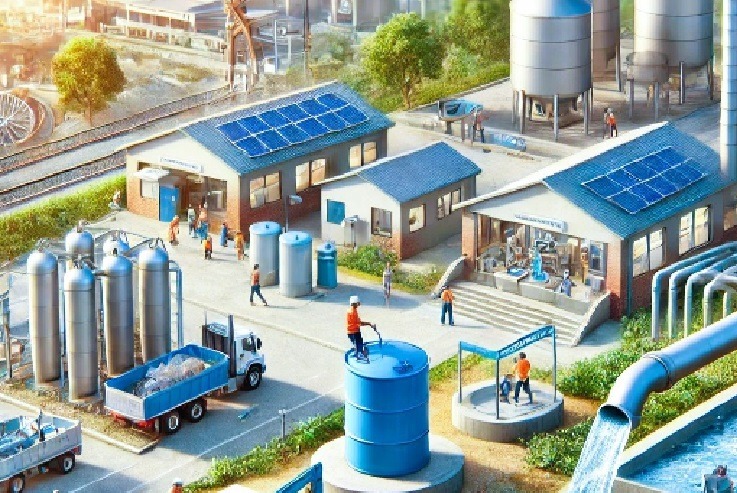
M&E IN WATER SUPPLY AND SANITATION PROJECT
- Dates: March 16 – 19, 2026
- Venue: Morogoro Hotel
- Fee: TZS 600,000/=
Water supply and sanitation projects play a critical role in improving public health, enhancing livelihoods, and fostering sustainable development. However, the success of such projects relies heavily on effective monitoring and evaluation (M&E) systems that ensure efficiency, accountability, and impact measurement. M&E serves as a crucial tool for tracking project progress, assessing outcomes, identifying challenges, and informing evidence-based decision-making to improve service delivery.
This course on Monitoring & Evaluation in Water Supply and Sanitation Projects is designed to equip project managers, engineers, and field staff with the necessary tools and knowledge to develop and implement an M&E framework tailored to water supply and sanitation initiatives. Participants will gain a comprehensive understanding of M&E methodologies, key performance indicators (KPIs), data collection and analysis techniques, and reporting mechanisms specific to water and sanitation interventions.
Why This Training is Essential
- Understand the role and importance of M&E in water supply and sanitation projects.
- Develop a clear M&E framework with defined indicators
- Conduct infrastructure assessments
- Analyze and interpret WASH data
- Implement tools and methodologies for effective monitoring and data collection.
- Analyze M&E data to assess project performance.
- Use evaluation findings for decision-making and future project planning.
- Ensure sustainability and impact assessment in water and sanitation projects.
LEARNING OBJECTIVES
By the end of this training, participants will:
- Design effective M&E frameworks for WASH projects
- Utilize M&E Tools and Methodologies
- Conduct infrastructure assessments
- Monitor and Evaluate Project Performance
- Select and apply appropriate monitoring indicators
- Improve Project Decision-Making and Implementation
- Evaluate Project Impact and Sustainability
- Analyze and interpret WASH data
- Enhance Stakeholder Engagement
- Write compelling M&E reports
Course Programme
Participants will work through a comprehensive curriculum that covers the following modules within five days:
Day 1: Foundations of WASH M&E
Day 2: Technical Monitoring of Water Infrastructure
Day 3: Sanitation Infrastructure and Services
Day 4: Data Management and Analysis
Day 5: Evaluation and Reporting
TARGET GROUP
This course is ideal for;
- Project managers and coordinators
- Engineers and technical staff in water supply and sanitation
- NGO staff working on water and sanitation initiatives
- Researchers and consultants in the water and sanitation sector and any staff responsible for safeguarding and managing data in their organizations
REGISTRATION FEE
TZS 600,000/= per person, paid through Equity Bank Account No. 3003211802968. Name: Para Africa Ltd. Fee shall cover 5-day course facilitation, course material, Certificate of Attendance, stationaries, conference package and site visit.
About the Facilitator
PEng. Dr. Doglas Mmasi: Established herself as a prominent figure in environmental engineering, specializing in water and sanitation infrastructure. With over two decades of experience in the water sector, she has made significant contributions both as an educator and as researcher at a water institute, where she focuses on teaching comprehensive monitoring and evaluation models for water and sanitation infrastructure projects. Her expertise has been instrumental in shaping the next generation of environmental engineers through her detailed instruction in project assessment methodologies.
As a fully registered Environmental Engineer, Dr. Mmasi has maintained an active presence in both academic and practical applications of water engineering. Her research portfolio includes extensive work in water and sanitation projects, resulting in more than 20 published papers that have contributed to the field’s body of knowledge. Through her consultancy work, she has applied her expertise to real-world challenges, bridging the gap between theoretical frameworks and practical implementation in water and sanitation infrastructure development.